What’s the best kind of feedback?
Over the years I’ve been teaching Creative Writing, I’ve often been surprised at what writers consider to be good feedback.
Yes, of course, we all like being told our writing is excellent, really good, definitely publishable, bound to win that competition etc etc. But honestly, when you think about it, how useful are such accolades?
I do believe in giving positive feedback, especially to start a critique (never start with a negative). Whatever you can say positively about someone’s writing, get it in first. Not only is that polite, it means you have found the good points in the writing, so the not-so-good points you want to make might well be better received.
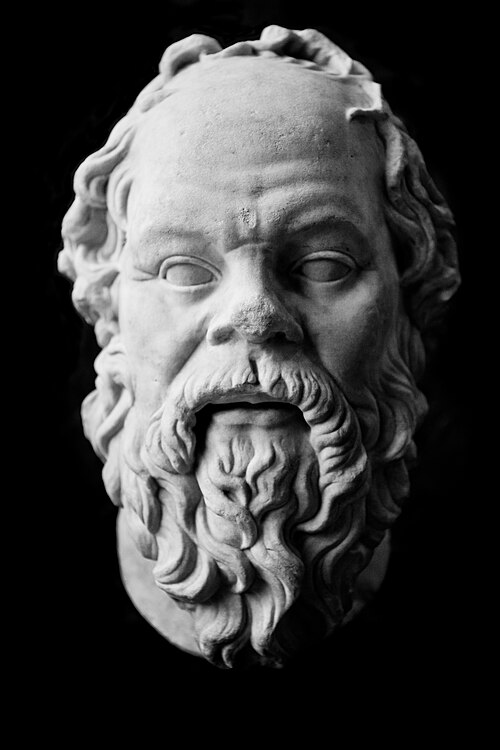
But I believe there is a far better way of eliciting the most useful feedback from your critiquers. It’s known as the Socratic Method.
System of questioning
Socrates was a Greek philosopher and teacher from Athens who lived in the first century BC. He used a system of questioning that encouraged critical thinking.
I first came across this method on a playwriting course some years ago now. We would take it in turns to bring in a scene of our current play and have it read by the group. (We had some really good professional actors in the group, so this was a very good experience). Afterwards, instead of our tutor giving an opinion and asking for everyone else’s opinions, she would ask questions, such as:
- What are the protagonist’s motives in this scene?
- What’s the relationship between characters a & b, as shown in this scene?
- Do you get a sense of where this scene is set?
- At what point in this scene do the dynamics change – where she becomes the dominant one and he the submissive?
Questions like this meant we knew we had to really listen and think about what we were hearing, instead of letting it wash over us! And for the writer, it meant that they were being informed of how and what the audience had got out of the scene.
Something is missing
Whether you are writing short stories or novels, you could try the Socratic Method in your writing group or with a writing buddy.
- Once your story/chapter has been read, you, the author, asks questions to see if what you intended to write has come across to your readers. For example, if you were writing a version of Cinderella, your first question might be: Why do you think this scene is set in a kitchen? You might have wanted to convey the difference between Cinderella “downstairs” and her ugly sisters “upstairs”. If this is what your readers say, then you’ve succeeded. If not, then something is missing.
- Another question might be: In this scene, what’s the relationship between Cinderella and Buttons? If they says friends, and you wanted Buttons to be in love with Cinders, then that will show you where work is needed.
- In a scene with the ugly sisters, you could ask what is motivating these two? If you had in mind greed, jealousy and insecurity, then those are the answers you’ll be looking for.
Practical use to you
Clearly, most of us will know the Cinderella story so your readers might be projecting their knowledge of the plot and the characters instead of just getting their information from the scene in front of them. When it’s a completely new story, your questions will elicit new, unbiased answers that should be of real, practical use to you in your edits/rewrites.
A word of caution: if you don’t get the answers you are expecting, please resist the temptation to say “Oh, but what I meant was …” . As the author, I recommend that you do NOT react to the answers, other than to ask more probing questions. It’s difficult, I know! We want to explain what we meant. But if your readers don’t “get” what you intended, then it’s not in the writing.
Enjoy some of the sunny and warm spring days we’ve been promised!
Happy Writing!
Linda
 Let's Get Writing