Oysters and alleyways – delights of Whitstable

Wandering through the alleyways of Whitstable, I found it easy to imagine how vibrant a town this was back in the hey-day of the oyster. In the 1850s, Whitstable was sending 80 million, yes million, oysters every year to London’s Billingsgate market. And that was a trade that had started back in Roman times, Kent oysters being sent to Rome from around 80 AD.
The alleyways are quite a feature of Whitstable but are less to do with oysters and more with smuggling and other nefarious activities. There are at least 23 named alleyways that join Whitstable’s High Street and Harbour Street to the foreshore, some wider than others. One end of Squeeze Gut Alley, for example, is wide and light but “as you near the end, it gets narrower and narrower between high forbidding walls that seem to be leaning inwards at their tops. It appears for all the world that you are approaching a dead end. But you turn right and then left and see a narrow opening, scarcely two feet wide, which allows you through.”
You’d be forgiven for thinking this was used by smugglers getting away from the excise men, but it actually got its name from a game the local youths liked to play with a rather rotund local bobby.
The quote above comes from a delightful booklet “Alleyways of old Whitstable” which details each of the 23 alleys – a rewarding afternoon’s treasure hunt for young and old alike!

An evening walk along the promenade is another of Whitstable’s gems. Not only will you witness some amazing sunsets but at low tide you can see oyster men and women going out on quad bikes and boats to collect the oysters from both natural beds and from bags on metal trestles.
And of course there is no shortage of oyster shacks, cafes and restaurants in which to sample the local delicacy, both along the foreshore and in the High Street.
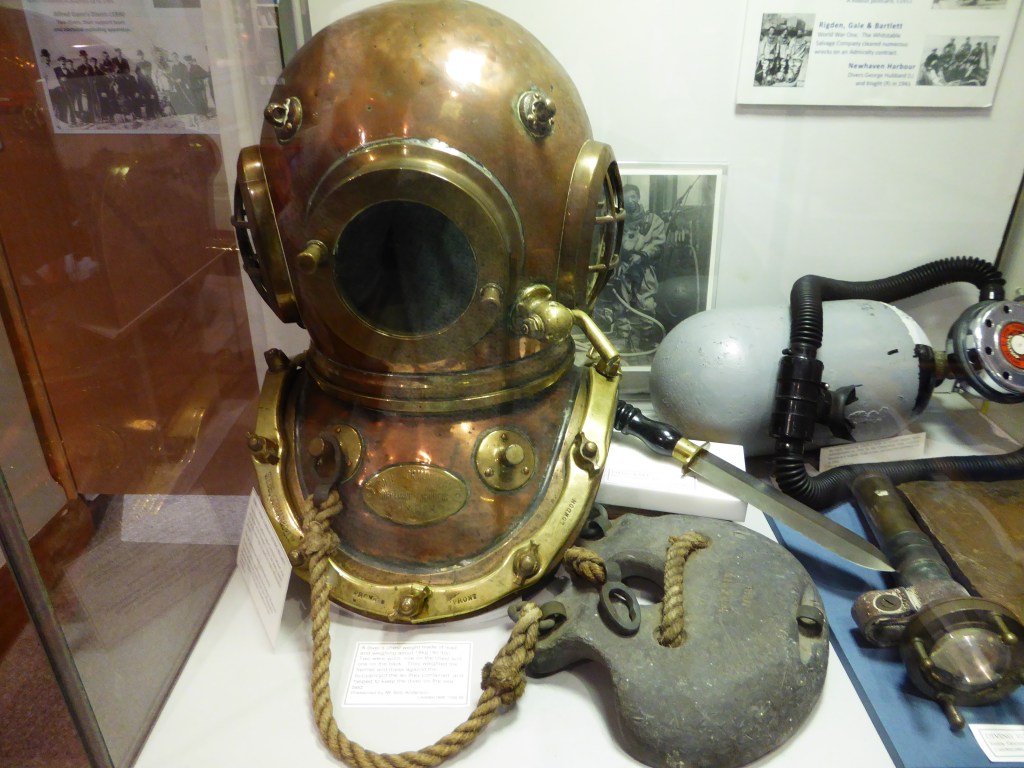
That is where you will also find Whitstable’s Community Museum which tells stories not only about oysters, but of diving, fishing, shipwrecks and ship building. I was particularly interested to learn that Whitstable is the birthplace of modern commercial deep-sea diving. Back in the 1820s, the Deane brothers adapted a firemen’s helmet into the world’s first successful diving helmet.

The museum also has an exhibition dedicated to local icon and legendary British actor Peter Cushing who was a Whitstable resident for 35 years. He was well-known as an unassuming gentleman who contributed to local charities, enjoyed walking and cycling and stopping off at the Tudor Tea Rooms and the Sportsman pub.

A favourite spot of mine during my stay there was Whitstable castle – an attractive crenulated building with beautiful gardens. On a sunny morning, I enjoyed a cuppa sitting on the castle terrace, overlooking the rose garden where, in the 40s and 50s, locals enjoyed summer-time dances.

Finally, let me explain why I chose Whitstable as a spring getaway. It was a television programme called Whitstable Pearl that attracted me. It’s a cosy crime story about a woman, Pearl, who runs an oyster restaurant and is also a private detective. That brings her into conflict with the local police inspector with the inevitable will-they-won’t-they get together scenario. The three series are on Channel U (via Channel 4) and I really enjoyed spotting the Whitstable locations – this is the Whitstable Yacht Club which transformed into the restaurant – the Whitstable Pearl.
Memories made in Mijas
We’re unlucky – it rains all week, in Spain in February. Our day trip to Gibraltar is cancelled hours after booking, because torrential rain has closed Gib airport and rendered the main roads in the south of Spain impassable. Further north, where we are, near Fuengirola, the rain is persistent, every day, but not so bad as to keep us from going out.
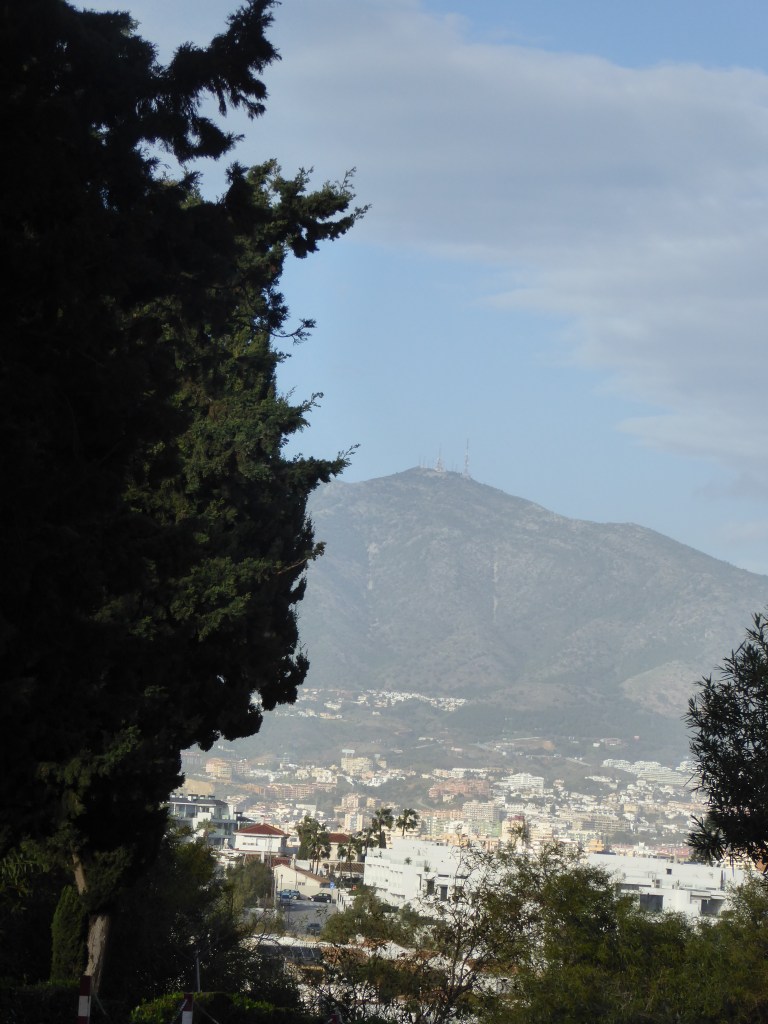
Friends have recommended the typically Andalucian white-washed village, Mijas Pueblo, we can see in the Sierra de Mijas above Fuengirola. The rain has eased so that’s our destination for the day. Much to my amazement, the drive takes just ten minutes – it looks further away – and the road isn’t the zig-zag switchback I was expecting.
The name Mijas has two meanings: it derives from the old Phoenician word for mountain but it’s also a contraction of Mi Hija in Spanish which means my daughter. And Mija is used as a term of endearment, like “honey” or “dear” for women and girls.
Mijas Pueblo is popular, whatever the weather, so finding a parking space takes a little while and, in the end, we opt for an underground carpark. Unbelievably, it costs just one Euro for the whole day, that’s 87 pence (Chichester car parks please take note!).
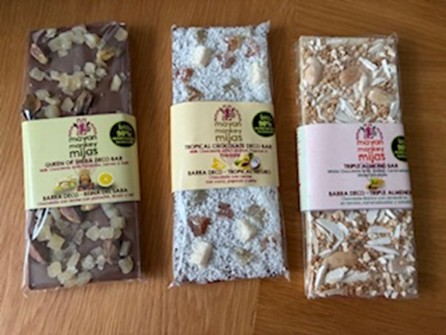
Coffee is a must do first for one of our party, and we find a delightful place near the main square called Mayan Monkey Mijas. Reputedly one of the smallest chocolate factories in the world, you can take a tour and even participate in a workshop. The coffee is much to our liking and we’re all ready for our exploration of this lovely village.
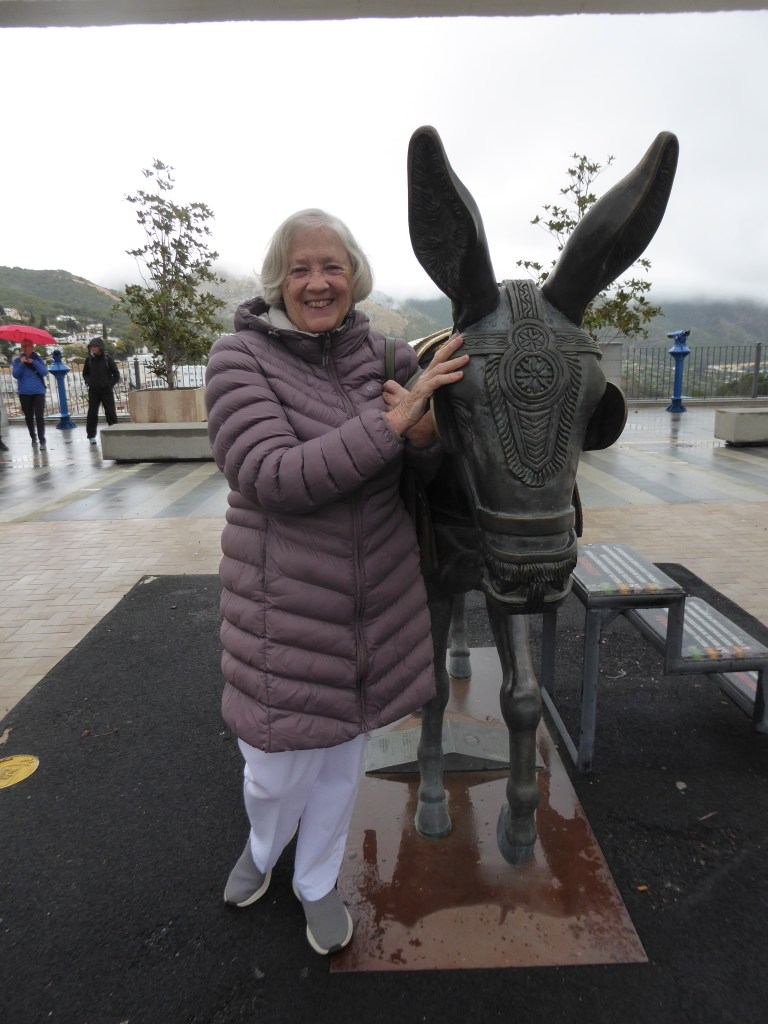
A word of warning: Mijas Pueblo is built into the mountainside so the delightful narrow, rambling streets are steep, which add to its charm and our fitness. So steep and rambling, in fact, that back in the 1960s the town introduced a novel taxi system – by donkey! This was the usual mode of transport for local workers, but when visitors began taking photos, a new tourist attraction was born. On our visit, not one of the 60 taxi donkeys could be seen – because of the weather. And, it has to be said, that nowadays the practice is somewhat frowned upon because of animal welfare concerns.
Ignoring the drizzle, we start our exploration of Mijas with a visit to the Miniature Museum – a delightful find. There’s a Mijas Donkey painted on a grain of rice; the seven wonders of the world painted on a toothpick and a bullfight painted on a lentil.
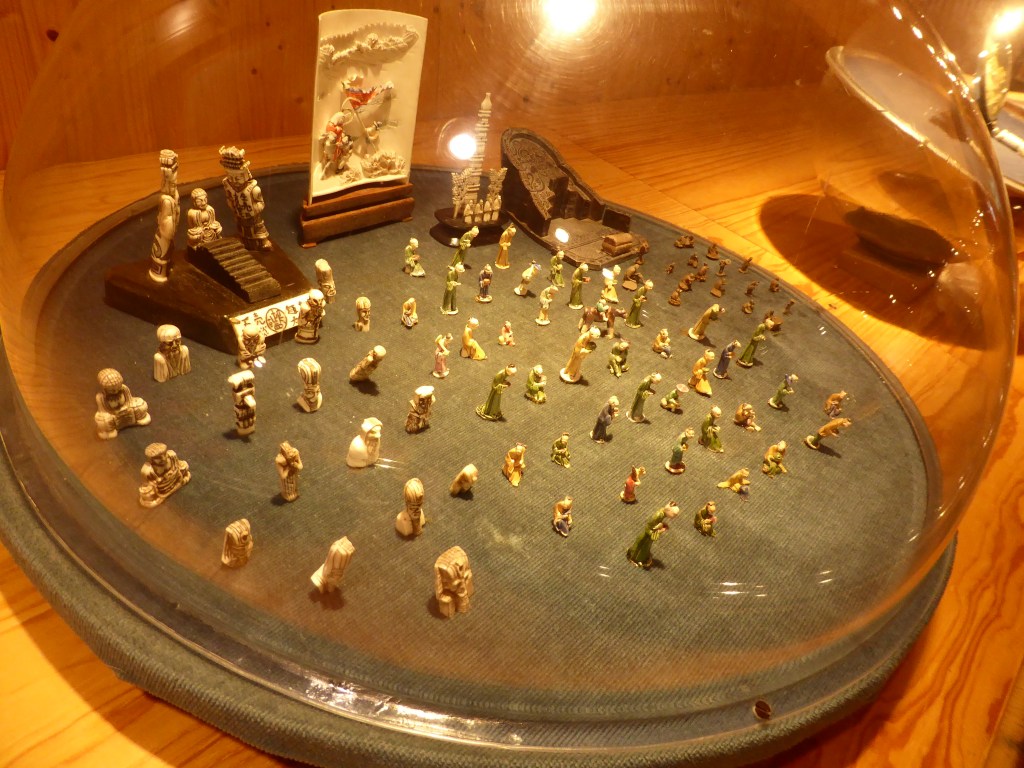
The photo to the right shows a table that is no more than 20 centimetres wide!
As well as the donkeys, Mijas has another claim to fame, albeit even more controversial – their bullring, which is an oval shape, rather than the conventional circle. Bullfighting is still legal in Spain, although some areas, like the Canary Islands, have banned the practice, while others just don’t take part. The Mijas bullring is still used for bullfights, but also for flamenco shows.
The views all the way up to the top of the village are spectacular, even in the rain and clouds. And, of course, back on the coast, it’s clearing up!
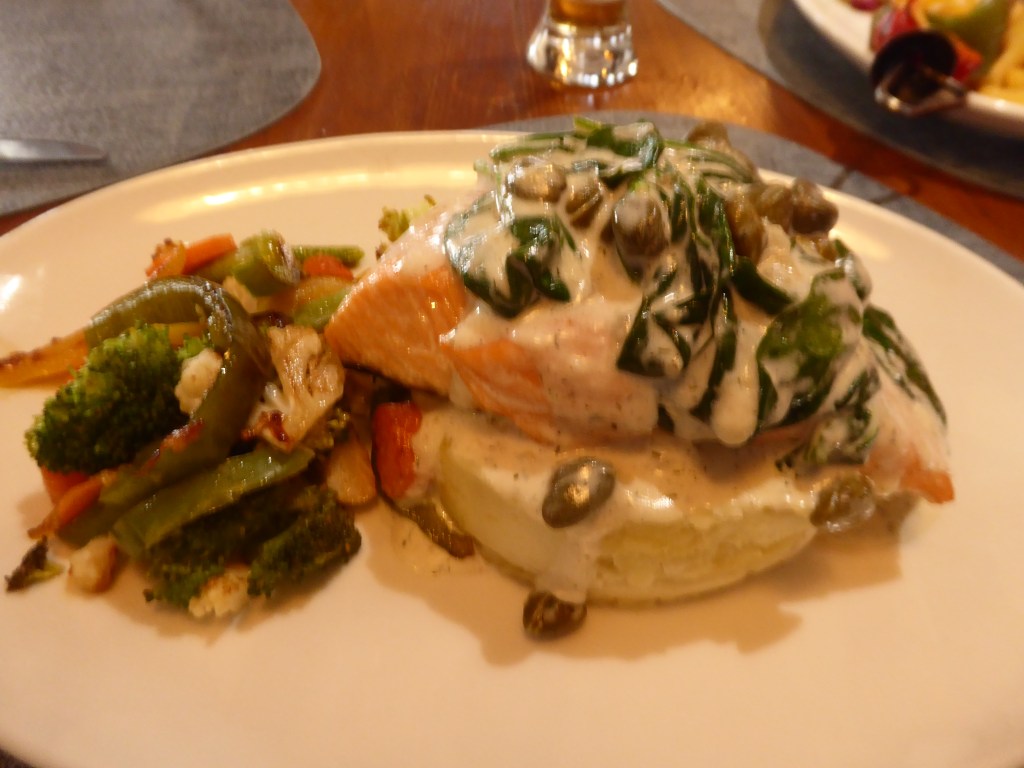
One of our group has visited Mijas before and is determined to find a rather nice restaurant she remembers. So, more climbing, more views and then she spots it – Restaurante Meguines. While we are dining exceptionally well, (on salmon with stir-fried veg and creamy mash) there’s a storm outside but by the time we have finished our leisurely lunch, the weather has cleared and we wander back, downhill this time, to collect the car. Not, though, before a return visit to Mayan Monkey Mijas for the purchase of chocolate!