Too little or too much?
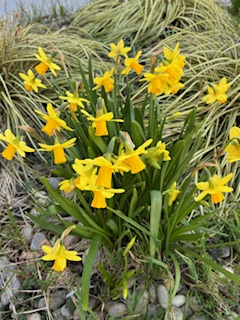
It’s so good to know that Spring is finally on its way here in the UK. We’ve had so much rain and flooding in the past few weeks but now, the daffodils are out, in gardens and along the roadside. They bring with them a freshness and a promise of better weather to come – hopefully!
This month I’m blogging on the fine line between telling and showing in fiction, plus a travel article on my recent, and exceptionally wet, trip to southern Spain.
Too much or too little
At one of my writing group meetings recently, we were discussing the very thorny issue of how much is too much in fiction writing, and how much is too little. It’s the difference between boring or confusing your readers with too much information; and leaving your readers dangling – not knowing or understanding the storyline.
In fiction, whatever the genre, it’s best to give your audience a clear idea of
- who the characters are,
- where they are and
- what is, physically, happening.
What you can deliberately leave out in the early stages are motives, meanings and backstory.
If you find you are intentionally leaving out certain information, ask yourself these questions:
Am I doing so to create tension? Or am I avoiding making a decision as to what should and shouldn’t be included at this point.
Tension is good, confusion not.
If your readers can picture the scene, where it is, who is there and what is happening, then they will be content to read on to find out the motives, meanings and backstory. But if they are confused, from the beginning, as to where the scene is, who is in it and what is happening, then they probably cannot be as engaged as you, the author, would like.
To that end, it is recommended that you include concrete images in almost every paragraph. Concrete refers to the nouns that you choose – and concrete nouns are those that can be sensed: seen, touched, heard, smelled, or tasted. (Non-concrete nouns are known as Abstract nouns and include things like happiness, fear, love, wonder etc.)
The more specific you can be with your concrete nouns, the better the image you will be creating for your readers. Instead of the setting being a room, choose the old-fashioned kitchen where mother and daughter are preparing dinner. (Argument, flying china and recriminations to come)
Instead of a family visiting a camp site, make it one they haven’t been to for ten years, now much more modern with actual showers, the young teenagers reluctant to leave their phones to help put up the tent while Dad gets out the ultra-fashionable barbecue.
Ground your reader
A clear picture in the reader’s mind will allow them to enjoy finding out the motives, backstory and why they are all there. Images ground your reader without over-explaining.
As always with writing, it is such a good idea to have others read your work – but only when you feel you are at the right stage. For some, this will be when you’ve written the first draft; for others it may well be just before they send off to an agent. That’s for you to decide.
Happy writing
On holiday recently, friends and I visited the lovely white-washed village of Mijas near Fuengirola in southern Spain. Go to Me and My Travels to read what we saw in between the rain showers!
Here’s to some warmer weather and Spring!
Linda





 Let's Get Writing