I’ve written it – now what?
A guide to Editing – part 1
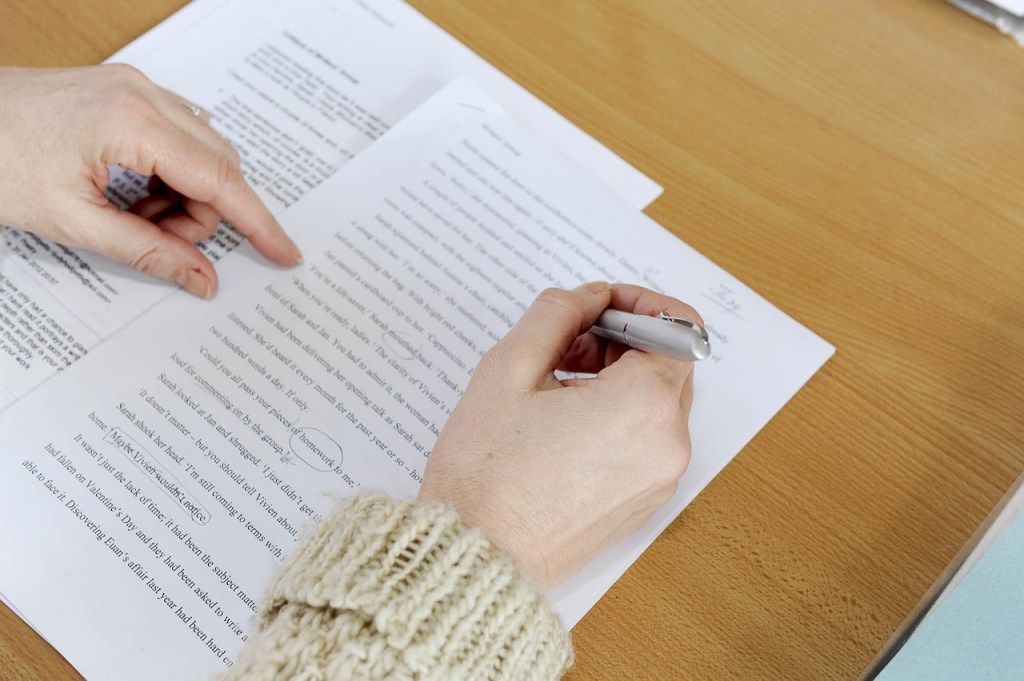
Whether you are a Pantser or a Plotter, whether you write every day or only when the Muse strikes, everyone’s writing will need EDITING.
There may be some writers out there who write perfect prose as soon as they put pen to paper or keyboard to screen. I have not yet come across them and I firmly believe everyone’s writing can benefit from editing. I have been told, on more than a few occasions, “But my mother/auntie/boyfriend has read it and they think it’s fine!”
Yes, lovely feedback! But are they writers? Do they understand about structure, characters and plot; punctuation and grammar; passive verbs, repetition, cliches. You do! And you are the person to do the first edit, before you even think about letting others see your writing.
So I’ve divided the subject of Editing into sections, two of which are addressed in this blog, with the rest to follow next month – yes, there’s a lot to editing!
- WHEN
It is ALWAYS a good idea to have a break after you finish your first draft. I can offer suggestions as to how long the break should be, but only you can decide what works for your writing. A short story, for example, could be left for a couple of days, or a week, before you read it again with a critical eye. A novel: much longer. Zadie Smith is said to recommend two years. That may or may not suit your lifestyle or your writing ambitions!
The idea of a break is to give you distance from your work, so that when you return, you can read it like a reader, not the writer. That way you are more likely to identify errors. So, take a break and you’ll see your writing with clearer eyes in order to edit.
2. THE BIG PICTURE
This is what’s called Developmental Editing, where you take a look at your whole piece of writing, whether short story, article, novel or play, and just read it through. You should be seeing if the whole thing hangs together, makes sense and is entertaining. Here are some questions you need to ask, mostly for fiction but many apply to other forms of writing too.
Does the beginning grab you?
Do you want to read on?
Is it obvious who your main character – the protagonist – is?
Does the reader know what your protagonist wants, what their goal is?
Can your reader empathise with your protagonist?
Does your story start actively? No long set-up, back story or descriptions.
Do you have too many characters? Are they all necessary?
Do your scenes and chapters flow easily? Are one or more out of order?
Are your verb tenses consistent? You may be writing in the present tense and then include a flashback – make sure your readers know where they are!
Do you have chunks of description? Are these descriptions seen through the eyes of your protagonist, or have you slipped into narrator mode?
Are your characters doing something in every scene?
Is there enough/too much conflict?
Have you gone off on a tangent that has nothing to do with the main or sub-plots?
Are you guilty of repetition? This can happen if you have more than one point-of-view character.
Is your protagonist in charge of the action, particularly the action that resolves everything. Your protagonist must not be a passive character.
Has your protagonist changed and grown by the end of the story?
Is your ending satisfactory? It doesn’t have to be the clichéd “happy ending”.
Are all the conflicts and sub-plots resolved?
Hanging endings, where the writer leaves the reader to decide what happens, are perfectly acceptable. But they still have to be logical and satisfactory.
Next month I’ll look at How to read your work when editing; the nitty-gritty of editing; and where to go for help.
If you have any comments, please do send me feedback (click the button on the bottom left), plus suggestions for future posts.
And please subscribe to receive regular posts – it’s free!
Happy writing!
Linda
 Let's Get Writing
Great tips Linda. I always dread editing although I know it’s entirely necessary. I usually enjoy the first draft of a short story because it’s purely creative and apart from the initial concept I have no idea where it’s going! I do tend to put it away for a week and can always see it needs work. Belonging to a small trusted writing group helps no end with critique on second and third drafts of a short story. I normally do three edits! I am looking forward to the next installment as I don’t have a planned approach and absolutely should!
LikeLike
Thank you, Jackie. I’m so glad you have a writing group who give you helpful feedback – I’ll be addressing writing buddies and others who can help in the editing process next month.
LikeLike